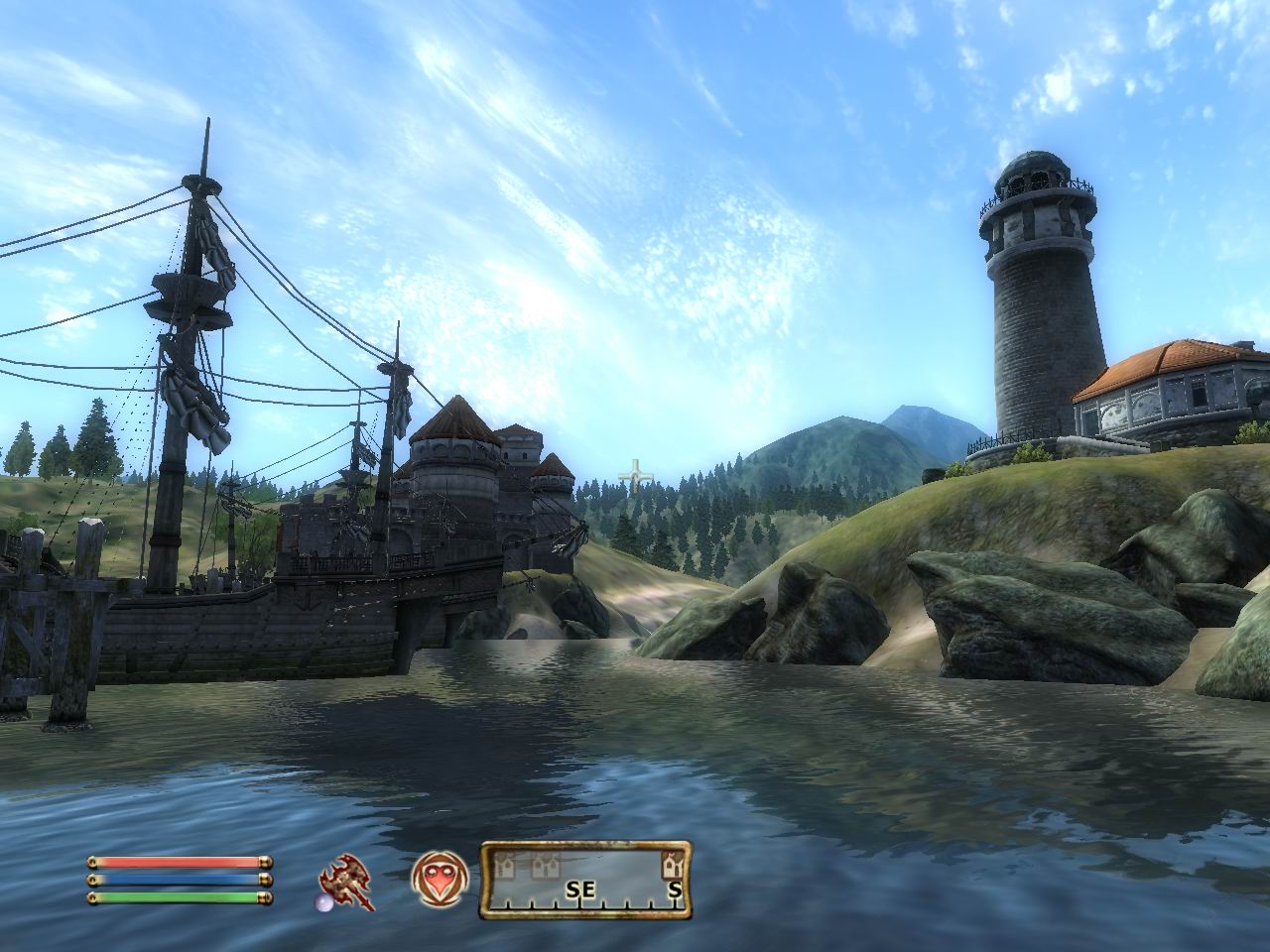
Mount & Blade: Warband


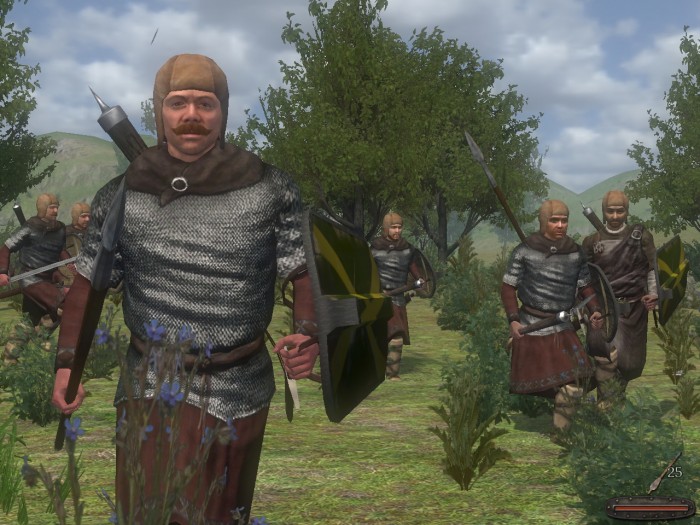
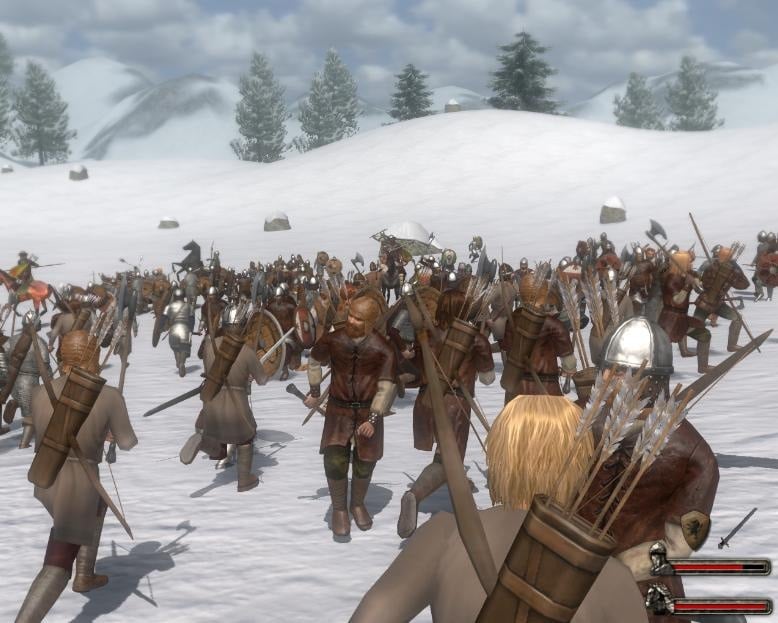


Mount&Blade: Warband is the first sequel for the medieval, single-player, open-ended, action role-playing video game video game Mount&Blade. First announced in January 2009, the game was developed by TaleWorlds and was published by Paradox Interactive on March 30, 2010, and is available as a direct download from the TaleWorlds' website, through the Steam digital distribution software, or as a DVD.
Mount&Blade is a single-player, action-oriented role-playing game without any fantasy elements, which takes place in a medieval land named Calradia. The game features a sandbox gameplay style, in which there is no storyline present. The player is able to join one of the five battling factions, fight as a mercenary, assume the role of an outlaw, or take a neutral side.
There are four main areas where battles take place: on the open map when two or more hostile parties meet, in tournaments organized in town arenas, in siege combat where the player is either defending or attacking a fortification, or in settlements after a triggering event (village is infested by bandits, guards catch the player sneaking in, the player is ambushed, or the player plunders a village).[16] The number of soldiers each party can hold is limited by the "leadership" skill and the renown of the leader. Participants in a battle can be either mounted or on foot. The player has to indicate the direction in which he wants to swing by moving the mouse accordingly.[17] Aiming with a ranged weapon is also done by using the mouse.
Damage is dealt depending on multiple factors. Aside from each weapon's quality, its effectiveness is also influenced by the character's skill with that type of weapon, and the speed of the player relative to the target: for example, a javelin thrown while running or riding a horse will be potentially more damaging than a javelin thrown while standing still.[19] Further, weapons have certain ranges where they are minimally and maximally effective, which gives the different weapon types different playing styles. A spear, for instance, will do minimal damage when used on an enemy very close to the player, where a hammer could cause maximum damage.
Mount & Blade may be the best game about medieval life ever made. Granted, games about the medieval era are few and far between, but they usually focus on adventure or strategy. In comparison, it's difficult to easily describe Mount & Blade, but it's a bit like a medieval version of Sid Meier's Pirates. It is part action game, where you can ride into battle, swinging a sword to hack your opponents. It's part role-playing, as you control a character that can level up, learn more skills, and even climb the ladder of feudal society. It is part strategy game, as you hire and train a company of soldiers that fight alongside you in battles. And it all takes place in an open world where you choose to be as noble or as dastardly as you want to be.
While obviously inspired by medieval history, the game is set on a somewhat random fantasy world full of kingdoms that spend a lot of time warring with one another; the setting could have been ripped from any generic fantasy novel. This lack of presentation is also evident in the early parts of the game; you're simply dropped into the world with little guidance or preparation. Still, if you stick with it you'll slowly discover a world full of tensions, trade, and warfare. You start by generating your character, using an RPG-style creationsystem. Select from male or female, an appearance, and then attributes such as strength and intelligence. Those attributes affect skills, of which there are many. Fighters will want to focus on skills like athletics and shield, battlefield commanders will want skills like leadership and tactics, merchant should go for looting and trading, and so on. Once that's done, you're in the world and what's next is entirely up to you. I suggest you go to the nearest village, start recruiting soldiers for your company, and see if the village elder has a job for you. These can range from helping to train the villagers in warfare so they can defend themselves from the occasional bandit raid to getting a fetch style quest to retrieve grain or cattle.
And so begins a long journey as you try and work your way up the social ladder of a feudal system. There are bandits, looters, and deserters to hunt down; you not only get money, but also loot that can be traded as well as experience points that let you level up your character and your troops. Your troops themselves start as raw recruits, but as they gain experience you can promote them to specialized roles, such as archers, spearmen, veterans, and lancers. The only downside with that is the more experienced a soldier, the higher a weekly wage he demands, so there's a constant need to generate income so you have enough to pay your troops. Even feeding your troops is important, as having a diverse amount of chow boosts their morale, and having no chow at all is also a big problem.While obviously inspired by medieval history, the game is set on a somewhat random fantasy world full of kingdoms that spend a lot of time warring with one another; the setting could have been ripped from any generic fantasy novel. This lack of presentation is also evident in the early parts of the game; you're simply dropped into the world with little guidance or preparation. Still, if you stick with it you'll slowly discover a world full of tensions, trade, and warfare. You start by generating your character, using an RPG-style creationsystem. Select from male or female, an appearance, and then attributes such as strength and intelligence. Those attributes affect skills, of which there are many. Fighters will want to focus on skills like athletics and shield, battlefield commanders will want skills like leadership and tactics, merchant should go for looting and trading, and so on. Once that's done, you're in the world and what's next is entirely up to you. I suggest you go to the nearest village, start recruiting soldiers for your company, and see if the village elder has a job for you. These can range from helping to train the villagers in warfare so they can defend themselves from the occasional bandit raid to getting a fetch style quest to retrieve grain or cattle.
At the heart of the game is the battle system, which does a great job at rendering the mob chaos that was medieval combat. Groups of combatants come together and bash one another, while cavalry slices through enemy lines. You have a key role, as you're in the thick of the action. You can specialize in the large variety of medieval weapons like swords, two-handed swords, axes, throwing axes, daggers, sabers, bows, crossbows, polearms, and so on. You can be clad in a wide range of armor, mixing and matching headgear, armor, gloves, footgear, and more. Finally, you can ride into battle, mounted atop a warhorse or steed, or dismount and go on foot. What's neat about the battle system is how "real" it feels; the game uses a physics system to model sword thrusts. Hit someone with a glancing blow and it barely hurts them. Charge at them on horseback and connect with a solid hit and you'll kill them. Momentum counts, and the sword battles feel challenging, yet they're not hard to master. As you and your troops gain a reputation, you can start doing jobs for the local nobility. These tasks range from delivering letters to hunting down fugitives to collecting taxes and "taking care" of an annoying merchant. Doing these jobs can gain you favor with a lord; gain enough favor or a big enough reputation and you'll even be invited to join the nobility. You'll get a small fief of land and a town that you can manage; you can build costly improvements that boost the town's economy as well as its loyalty to you. And, as a member of the nobility, you can serve as a champion to a local lady, fighting duels for her honor.
While battles take up a large chunk of your time, there's so much to do and see outside of them. The map is dotted with castles and towns that can offer up quests; there's also a sense that this is a living, dynamic world, as trade caravans roam the countryside. You'll encounter plenty of war parties, as the kingdoms wage war with one another. You can get drawn into these by either becoming a mercenary company in service to one lord, or if you've become part of the nobility in one kingdom and the king raises his banners then you've got to go off to war or else. These battles are much bigger than simply hunting down bandits; you face much better troops (and more of them), plus there are castle sieges to deal with.
In between wars you can try your hand in trading goods from castle to castle in an attempt to generate lucrative profit. Or there are tournaments that you can partake in for fame and money. The politics of the world can be tricky, as pleasing one lord can often displease another, but there's another layer, as there are claimants to many thrones who are in exile; you can choose to champion their cause if you'd like. It doesn't take too long before you find yourself being drawn into the world of Mount & Blade.
On a down note, the game's production values range from decent to primitive. Character models are awkward up close; you notice things such as necks sticking weirdly out of torsos. Yet in battle the fluid animation makes it almost thrilling to engage in a horseback pursuit. The fights themselves are the best looking part of the games, but the world map and the paper doll character interfaces are downright crude, looking like they belong to games 10 or 15 years in the past, though, on the plus side, everything loads quickly. Transitioning between battles, towns, and the world map only takes a few seconds. Sound effects are limited mainly to the clomping of horses' hooves and the clanging of swords. The music tries to inject some color and variety into things, but its synthesizer roots feel out of place for the subject matter.

Level up!